Low Competitive Halloween KDP Niches Ever
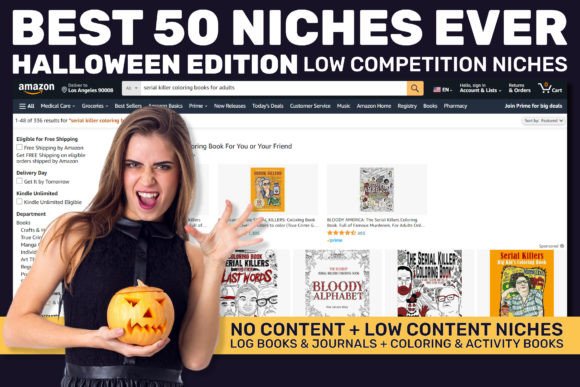
If you're building a sustainable Kindle Direct Publishing business—especially around seasonal demand—Halloween is one of the most reliable, high-conversion windows each year. But competing for broad terms like “Halloween coloring book” or “spooky journal” means battling thousands of titles with thin margins and saturated keywords. That’s why LOW COMPETITIV HALLOWEEN KDP NICHES EVER isn’t just another list—it’s a strategic filter. It identifies underserved intersections where audience need meets low keyword difficulty, realistic search volume, and clear visual or functional differentiation.
These aren’t “gimmick” niches. They’re real, recurring use cases: planners for haunted house operators, log books for paranormal investigators, themed gratitude journals for mindful October routines, or interior design trackers for Halloween home decorators. What makes them low competitive isn’t obscurity—it’s specificity rooted in behavior, not just aesthetics.
Why These Niches Work in 2024—and Beyond
Q3 and Q4 2024 show strong growth in *intent-driven* Halloween searches—not just “cute,” but “functional.” Think: “Halloween party prep checklist printable,” “witchy habit tracker,” or “pumpkin carving log book.” These phrases signal readiness to buy, not just browse. And because they combine seasonal relevance with evergreen utility (planning, tracking, reflecting), many convert well beyond October.
That’s also why this list stays relevant into 2025. Unlike trend-chasing niches (“vampire TikTok journal”), these are built on durable behaviors: decorating, hosting, crafting, collecting, learning, and self-care—all amplified by Halloween’s cultural energy. When you anchor a low-content or activity book to a real action—not just a theme—you build longevity, not just seasonality.
Creative Applications Across Audiences
Different creators use these niches in distinct ways—no single “right” format exists. Here’s how three user types might apply them:
- Designers & illustrators can develop cohesive interior themes—e.g., “Gothic Library Log Book” with Victorian borders, serif typography, and ink-blotted margins—then extend that aesthetic across matching coloring pages, sticker sheets, or wall art PDFs.
- Educators & homeschoolers might adapt “Halloween Science Log Book” into a printable lab notebook for pumpkin decomposition experiments, bat echolocation charts, or candy density comparisons—blending curriculum standards with seasonal engagement.
- Small business owners (haunted attractions, pop-up shops, craft fairs) use “Haunted House Staff Shift Planner” as both an internal tool and a branded product—printed on cardstock, sold at check-in, or bundled with staff swag.
The key is staying anchored to *use*, not just decoration. A “Witch’s Apothecary Inventory Log” works because it solves a real problem for makers selling herbal sachets or crystal kits—not because it has a cauldron icon.
Practical Ways to Build Around Low-Competition Ideas
You don’t need 50 new books overnight. Start with one niche, then expand intelligently:
- Pick a core log book or planner format—e.g., “October Gratitude Tracker”—and validate demand using free tools like Publisher Rocket or Amazon autocomplete. Look for phrases with 100–1,000 monthly searches and under 300 competing titles.
- Add micro-variations: “Gratitude + Sleep Journal for October,” “Gratitude + Moon Phase Tracker,” or “Gratitude for Kids: Halloween Edition.” Each serves a subtle segment without cannibalizing your main title.
- Bundle thoughtfully: Pair a “Pumpkin Carving Idea Log” with a companion “Carving Technique Guide PDF” (delivered via email opt-in). This builds your list while reinforcing authority.
- Repurpose interiors: Use the same layout system across multiple niches—e.g., the grid structure from “Haunted House Maintenance Log” adapts cleanly to “Vintage Toy Collection Tracker” or “Cemetery Visits Journal.” Consistency saves time; variation keeps listings fresh.
Clarity matters more than complexity. A clean cover, descriptive subtitle (“A Printable Log Book for Paranormal Investigators & Enthusiasts”), and interior that respects user workflow (e.g., dated entries, space for notes + photos) will outperform flashy but confusing designs every time.
What Makes a Niche Truly Low Competitive—Not Just Quiet
Low competition doesn’t mean “no one searched for it.” It means:
– Search volume is steady (not spiking only in late October),
– Top-ranking books have weak covers, thin interiors, or outdated formatting,
– The phrase includes modifiers that signal intent (“printable,” “log book,” “for adults,” “tracker”), and
– There’s room for obvious improvement—better organization, stronger visuals, or deeper utility.
For example: “Halloween Interior Design Mood Board Planner” currently has under 200 active listings. Most are generic clip-art collages. A version with editable Canva-ready templates, color palette swatches, and room for vendor notes fills a real gap—and appeals to interior bloggers, rental hosts, and small venue owners who decorate annually.
Getting Started—Without Overwhelm
You don’t need the full Excel or PDF file to begin. Start with five niches from the LOW COMPETITIV HALLOWEEN KDP NICHES EVER list that align with your skills or interests. Sketch one interior page. Write one clear subtitle. Test it in Amazon search. See what auto-suggests. Then refine—not replace—your idea based on real signals.
Remember: The goal isn’t to chase every niche. It’s to find the ones where your voice, style, or experience gives you a quiet edge—where “low competitive” meets “high alignment.” That’s where sustainable KDP work begins.
Whether you’re launching your first log book or scaling a seasonal catalog, these niches reward consistency over speed, clarity over clutter, and usefulness over novelty. And in 2024—and 2025—that’s not just smart SEO. It’s smart publishing.