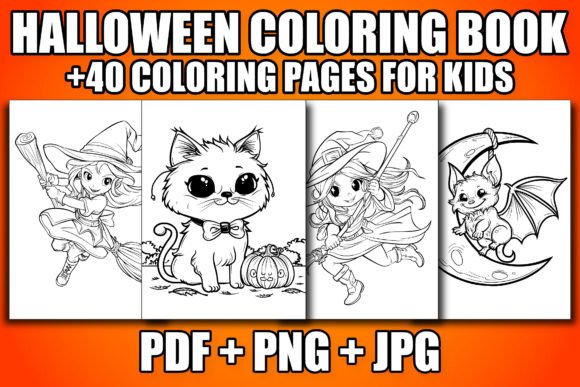
Horror Halloween Coloring Book Adults: A Thoughtful Creative Tool for Today’s Mindful Makers
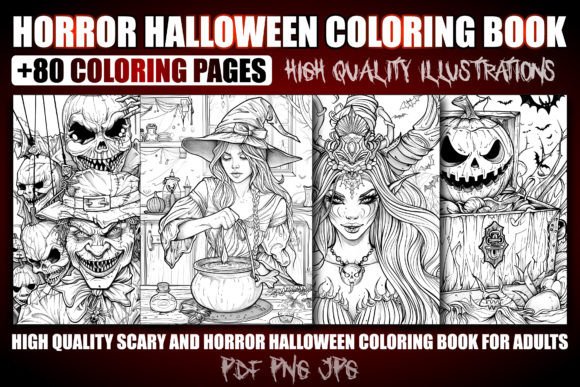
Coloring isn’t just for kids anymore — and it hasn’t been for over a decade. What began as a quiet wellness trend has matured into a meaningful creative practice for adults seeking focus, emotional release, and tactile engagement in a screen-saturated world. The Horror Halloween Coloring Book Adults sits at the intersection of this evolution: part seasonal celebration, part expressive outlet, and part practical digital product designed for creators navigating Amazon KDP with intention.
More Than Spooky Aesthetics — Why Horror Resonates With Adult Colorists
Horror-themed coloring pages appeal not because they frighten, but because they invite complexity. Gothic architecture, intricate witch silhouettes, shadow-draped cemeteries, and ornate jack-o’-lanterns offer rich linework, layered textures, and symbolic depth — all qualities that support sustained attention and mindful immersion. Unlike generic floral or mandala designs, horror motifs carry narrative weight and cultural resonance. A witch isn’t just a figure; she’s folklore, resistance, mystery, or reclamation — depending on how the colorist chooses to interpret her. That nuance matters. It gives adults permission to explore mood, contrast, and symbolism without needing to “explain” their choices — a rare luxury in professional and social settings.
This aligns with broader shifts in self-care: people increasingly favor practices that honor emotional authenticity over forced positivity. Coloring a haunted forest or a vintage séance scene isn’t about fear — it’s about claiming space for the darker, quieter, or more mysterious parts of human experience. That makes the Horror Halloween Coloring Book for Adults not just seasonally timely, but psychologically grounded.
Designed for Real Workflows — Not Just Decoration
The version described — KDP Interior Coloring Book for Adults, 80 high-quality pages, 8.5 x 11 inches, ready-to-upload PDF/PNG/JPG files — reflects how digital creative tools have matured. It’s built for efficiency without sacrificing quality. Professionals launching on Amazon KDP no longer need to wrestle with bleed settings, CMYK conversion, or inconsistent line weights. These interiors are pre-optimized: clean vector-style line art, consistent 300 DPI resolution, centered compositions, and generous margins — all tested against KDP’s print-on-demand requirements.
That reliability matters. A freelance designer launching a bundle of themed coloring books might use this as a foundational interior, then layer in custom covers, branding, or companion guides. An educator developing a seasonal art therapy module could extract select pages for classroom use — knowing each one prints clearly on standard copy paper. Even bloggers reviewing adult coloring resources can reference specific page numbers or motifs (e.g., “Page 42’s gothic cathedral offers ideal scaffolding for experimenting with grayscale gradients”) — adding credibility and utility to their content.
How This Fits Into Broader Creative & Business Shifts
Three trends converge here:
- The rise of “high-content” micro-products: Instead of betting on one massive, resource-heavy launch, creators now test demand with focused, polished assets — like a tightly themed 80-page interior. It lowers upfront risk, speeds time-to-market, and generates early data on audience response.
- Increased expectation for technical readiness: Buyers on KDP — especially repeat creators — scan listings for keywords like “ready to upload,” “KDP interior,” and “8.5 x 11.” They’re not looking for raw sketches; they want production-ready files that integrate smoothly into their existing workflow. This isn’t about convenience alone — it’s about respecting their time and expertise.
- Seasonal creativity as sustainable practice: Halloween isn’t just October. For many creators, it’s a 12-month cycle: research in January, design iteration in March–May, listing optimization in July, and promotion ramp-up by late August. A well-structured Horror Halloween Coloring Book Adults interior supports that rhythm — reusable across years, adaptable for variations (e.g., adding “bonus witch lore” text pages), and scalable when bundled with other themes like “Dark Fantasy” or “Gothic Nature.”
Practical Implications — Beyond the Page
For the individual colorist, this isn’t passive entertainment. Choosing deep indigo for a raven’s wing or leaving a ghost’s outline uncolored is an act of intentional choice — a small but real exercise in agency. In clinical and educational contexts, horror-adjacent imagery has long been used to gently explore boundaries, fear responses, and symbolic thinking. A therapist might use a “haunted mirror” page to prompt reflection on self-perception; a writing instructor could pair a “cursed library” illustration with a short fiction prompt.
For creators, the value lies in versatility. The 80-page count strikes a balance: substantial enough to justify pricing ($7.99–$12.99 range performs well), yet lean enough to avoid bloat or diminishing returns. Each page is intentionally varied — some dense and detailed (ideal for experienced colorists), others more open and suggestive (accessible to beginners or those managing fatigue or chronic pain). That range expands potential audience reach without diluting the core theme.
And for marketers or content creators? This product offers natural hooks: “How to Use Horror Coloring Pages for Stress Relief,” “Why Witches Are Having a Creative Renaissance,” or “Building a KDP Bundle Around Seasonal Themes.” It’s not just a coloring book — it’s a conversation starter, a teaching aid, and a quietly strategic asset.
What Quality Actually Means Here
“High-quality coloring pages” isn’t marketing fluff — it’s measurable. It means consistent 2-pt line weight throughout, no unintended gaps or overlaps in outlines, no pixelation at print size, and motifs scaled appropriately for adult hands (no tiny, frustrating details crammed into corners). It means witches drawn with anatomical plausibility — not caricature — and haunted houses rendered with architectural logic, not just spooky clutter. That level of craft signals respect for the user’s time and intent.
It also means thoughtful pacing across the 80 pages. You’ll find breathing room: full-page spreads balanced with smaller vignettes, repeating motifs (like crescent moons or ravens) that create cohesion, and subtle progression — perhaps beginning with atmospheric scenes and building toward more complex figures like a ritual circle or spectral procession. That structure supports flow, not frustration.
A Realistic Note on Longevity and Adaptation
No single theme dominates forever — but strong ones evolve. The Horror Halloween Coloring Book for Adults doesn’t rely on viral trends or fleeting aesthetics. Its foundation — gothic tradition, folk horror, vintage occult illustration — has endured for centuries. That durability means it can be refreshed, not replaced: new cover treatments, updated metadata (“witches coloring book,” “dark coloring book for adults”), or minor interior tweaks (adding alternate line styles or bilingual captions) extend its shelf life meaningfully.
What won’t work is treating it as a static download-and-forget file. The most successful creators treat even ready-to-upload interiors as living assets — tracking which pages get shared most on Pinterest, noting customer notes about preferred paper types, or using buyer questions to inform future expansions (e.g., a companion “color theory guide for horror palettes”).
Final Thought: Creativity With Intention
The Horror Halloween Coloring Book Adults represents something quietly significant: the merging of aesthetic depth, functional design, and empathetic understanding of how adults actually create, rest, and build. It meets people where they are — whether that’s unwinding after a demanding workday, testing a new KDP strategy, or simply reclaiming the joy of making marks on paper. It doesn’t promise transformation — just space, structure, and a little well-crafted spookiness to color your way through the season.