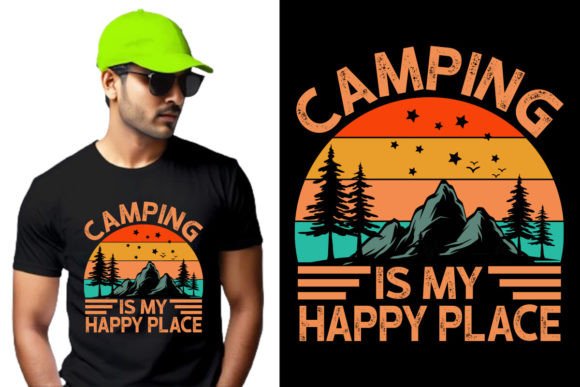
Camping Is My Happy Place
There’s something quietly powerful about the phrase Camping is my happy place. It’s not just a sentiment—it’s a mindset, a lifestyle anchor, and for many, a visual language they want to wear, display, or share. Whether you’re stitching it onto a flannel shirt, printing it on a ceramic mug for morning coffee by the fire, or turning it into a cozy pillow for your reading nook, this design carries warmth, authenticity, and intentionality.
What “Camping Is My Happy Place” Really Means
At its core, Camping is my happy place reflects emotional resonance—not just with nature, but with simplicity, presence, and personal rhythm. It’s the sigh of relief when the tent stakes go in. The quiet hum of a camp stove at dawn. The way light filters through pine boughs. For some, it’s nostalgia—childhood trips with family. For others, it’s autonomy—a solo trek where decisions are yours alone. And for many creators and small business owners, it’s a ready-made emotional hook: instantly relatable, gently aspirational, and deeply human.
Why This Design Fits So Many People—Differently
No two people experience camping—or happiness—the same way. That’s why this design isn’t one-size-fits-all. Its strength lies in how flexibly it serves different goals, skill levels, and contexts.
For Beginners & Hobbyists
If you’ve just bought your first tent or printed your first t-shirt using a home iron-on kit, this design is approachable. The clean typography and balanced layout mean it prints well even on basic inkjet printers (with transfer paper) or entry-level heat presses. You don’t need vector expertise to start—you can use the high-res PNG file right away. No clipping masks, no layers to untangle. Just open, resize, and apply. It’s forgiving, scalable, and designed to look intentional—not amateurish—even if you’re learning as you go.
For Educators & Community Organizers
Teachers leading outdoor education units, scout leaders planning campouts, or nonprofit staff organizing nature-based wellness events often need printable, reusable assets that feel uplifting—not corporate. This design works on handouts, bulletin boards, or custom lanyards. The transparent PNG lets you overlay it on photos of local trails or student artwork. The PDF version fits neatly into lesson plans or digital resource kits. It supports connection without demanding technical fluency.
For Creators & Print-on-Demand Sellers
You know the drill: consistency matters, but so does speed. The Camping is my happy place bundle gives you production-ready files across formats—no last-minute conversions or pixelated previews. The EPS and AI files let you tweak colors or spacing for seasonal variants (think “Camping is my happy place—Winter Edition”). The 4500×5400 PNG at 300 dpi meets major POD platform specs for mugs, hoodies, and wall art. And because it’s a single ZIP file with clearly labeled assets, you skip the hunt-and-peel process common with poorly organized downloads.
For Small Business Owners & Local Brands
A café near a national forest might embroider this phrase on aprons. A gear rental shop could stamp it on reusable water bottles. A wellness retreat center may feature it on guest journals or linen tags. What makes this design commercially practical isn’t just its versatility—it’s its tone. It doesn’t shout. It invites. It feels grounded, not generic. That authenticity translates directly to customer trust—especially when paired with locally made or eco-conscious products.
File Formats, Explained—Without Jargon
You’ll receive six files, all compressed into one ZIP folder:
- PNG (4500×5400 px, 300 dpi, transparent background): Best for direct printing—t-shirts, mugs, pillows, posters. Works with most online platforms and home printers.
- EPS: A vector format ideal for scaling up without quality loss—great for banners, signage, or large-format apparel.
- JPG: High-quality raster version for quick mockups, social posts, or email newsletters.
- AI (Adobe Illustrator): Full editable vector—change fonts, adjust spacing, add icons, or integrate with other brand assets.
- PDF: Print-ready, universally viewable, and great for sharing with vendors or collaborators who don’t use design software.
All files are pre-optimized—no color profiles to fix, no missing fonts, no embedded links to break. Extract with WinRAR, 7-Zip, or any standard unarchiver. Done.
Where This Design Shines—and Where It Might Not Fit
This isn’t a flashy, neon-lit graphic meant for festival merch. It’s not hyper-detailed line art requiring precision cutting. And it’s not minimalist enough for ultra-sparse branding systems. Instead, it lives in the thoughtful middle ground: warm but professional, simple but expressive, nostalgic but current.
It works especially well when your goal is recognition + resonance. Think: a teacher handing out a “Camping is my happy place” sticker after a field trip. A freelance designer adding it to a client’s eco-tourism brochure. A parent screen-printing it on a child’s backpack before summer camp. In each case, the value isn’t just visual—it’s emotional shorthand.
That said, if you need photorealistic wilderness scenes, intricate botanical borders, or multilingual versions, this design won’t stretch that far. It’s intentionally focused—not a Swiss Army knife, but a well-balanced trowel: precise where it needs to be, reliable in daily use.
Real Projects, Real Uses
Here’s how real people have applied it:
- A librarian used the PDF to create laminated bookmarks for a “Summer Reading: Outdoors Edition” program—paired with trail maps and local wildlife guides.
- A yoga instructor embroidered the design on organic cotton tote bags for her “Forest Flow” weekend retreat—using the AI file to match her logo’s font weight.
- A college outdoor club printed the PNG on hoodies for their annual fall backpacking trip—ordered through a local screen printer who accepted the file as-is.
- A stationery seller added the EPS version to a bundle of printable camping journal pages—scaling it to fit perfectly on cover layouts.
None of these required advanced skills. All relied on clarity, consistency, and emotional alignment—not complexity.
Does This Match Your Next Step?
Ask yourself: • Is authenticity more important than novelty in your context?
If yes, then Camping is my happy place isn’t just a phrase. It’s a tool—one that supports your message, honors your audience, and stays useful long after the campfire cools.